



Productive Conflict: Turning Team Tension into a Strength
What if conflict wasn’t something your team avoided — but a capability they mastered?
Productive conflict is an important capability in high-performing teams. Different ideas, interpretations and perspectives will naturally create tension from time to time.
That’s not necessarily a problem.
What matters is how your team responds.
Handled well, conflict can lead to better conversations, stronger ideas and more considered decisions. Handled poorly, it can damage trust, relationships and performance.
As Patrick Lencioni puts it:
“Conflict is no more than an attempt to find the best possible answer.”
So perhaps we need to stop asking how we can avoid conflict.
Instead, we could ask:
How can we get better at it?
Conflict is part of working together
Conflict can show up in many ways.
- People challenge ideas.
- Teams debate direction.
- Colleagues negotiate resources.
- Someone questions an expectation or decision.
- Different perspectives collide.
These moments are inevitable when people are working together on things that matter.
The real question is what happens next.
- Do people feel safe enough to lean into the conversation?
- Can they disagree without damaging the relationship?
- Or do people become defensive, withdraw or shut down?
Over time, those responses shape the team’s culture around conflict.
Not all conflict is productive
We’ve seen teams respond to conflict in very different ways.
In some, disagreement quickly becomes personal. People defend their position, blame others or stop listening.
Sometimes they withdraw altogether.
In other teams, people have worked hard to develop more constructive responses. They can disagree, challenge and debate while maintaining trust and respect.
That doesn’t mean those conversations are always comfortable.
Productive conflict isn’t about removing tension. It’s about learning how to work through it well.
What happens when conflict gets difficult?
Our reactions to conflict can be surprisingly automatic.
- We might become defensive.
- We might dismiss another person’s opinion.
- We might blame.
- We might withdraw or stop communicating openly.
- Or we may try to overpower the conversation and prove that we’re right.
Often, these reactions happen before we’ve consciously thought about them.
That’s why self-awareness is so important.
When we understand our default responses, we have a greater opportunity to notice them and make a different choice.
From reactive to constructive
Building a culture of productive conflict means helping people replace automatic reactions with more constructive behaviours.
That could mean:
- Finding common ground rather than simply caving in.
- Taking ownership rather than becoming defensive.
- Seeking understanding rather than dismissing another person’s opinion.
- Including others rather than excluding them.
- Acknowledging feelings rather than blaming.
- Communicating openly and honestly rather than becoming passive-aggressive.
- Staying engaged rather than withdrawing.
- Listening fully rather than shutting down.
- Collaborating rather than trying to overpower others.
These may sound like small shifts.
But collectively, they can transform the way a team handles disagreement.
Psychological safety doesn’t mean avoiding disagreement
There is an important connection here with psychological safety.
A psychologically safe team isn’t necessarily a team where everyone agrees.
In fact, creating genuine safety should make it easier for people to raise concerns, question ideas and offer different perspectives.
People need to know they can disagree respectfully without being punished, excluded or dismissed.
That’s when diversity of thought becomes valuable.
If people have different perspectives but don’t feel able to express them, the team never benefits from that difference.
So healthy conflict and psychological safety can work together.
One gives people permission to speak.
The other helps them navigate what happens when they don’t agree.
Productive conflict is a capability you can build
Teams don’t simply have to accept their current conflict culture.
It can change.
One of the tools we use with individuals and teams is the DiSC Productive Conflict Framework and Profile.
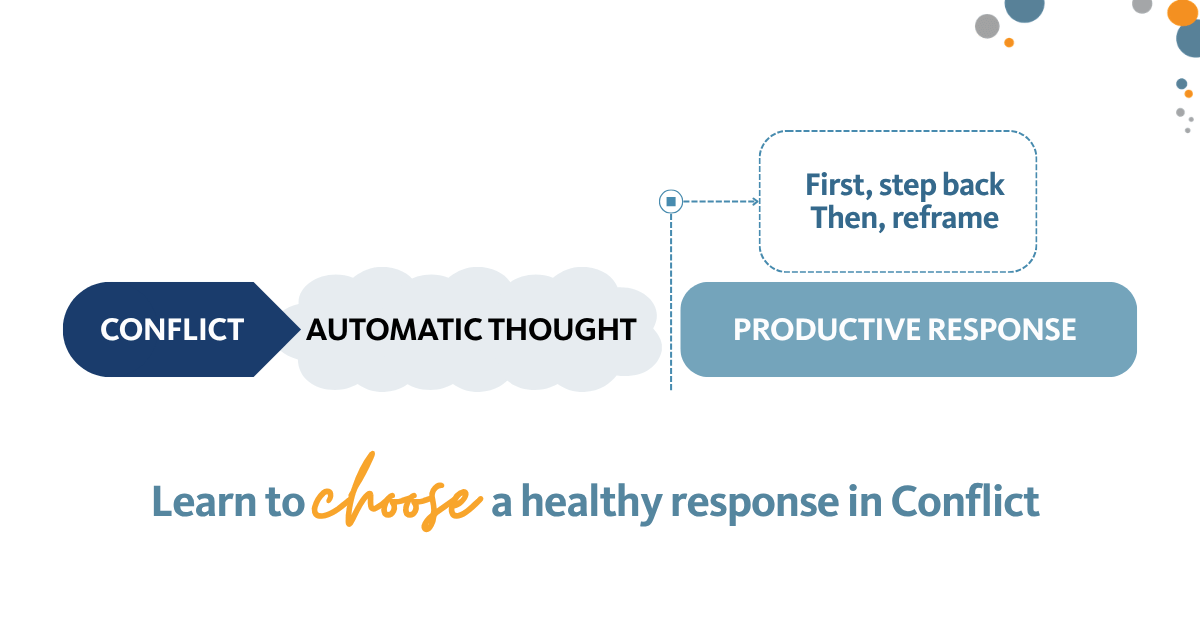
The framework helps people understand their automatic thoughts and reactions during conflict.
Importantly, it doesn’t stop at awareness.
It also provides strategies to help people pause, reframe what is happening and choose a healthier response.
With practice, teams can start to build a different kind of muscle.
They become better able to stay in difficult conversations.
They can challenge without attacking.
They can listen without immediately defending.
And they can disagree while protecting the relationship.
Over time, productive conflict can become part of how the team works.
What is the culture of conflict in your team?
Think about what happens when people disagree.
- Do people lean in or shut down?
- Do they seek to understand or rush to defend their position?
- Can people challenge ideas without challenging the person?
- Do difficult conversations strengthen relationships or damage them?
And perhaps the most important question:
- What could shift if your team learned to leverage conflict rather than avoid it?
If you want productive conflict to become a capability within your team, Mather Consulting can help individuals and teams understand their conflict responses and build more constructive ways of working together.
We’d love to work with you.
For more insights, updates and news from Mather Consulting, follow us on LinkedIn.